What Is the Most Common Accident on a Construction Site?
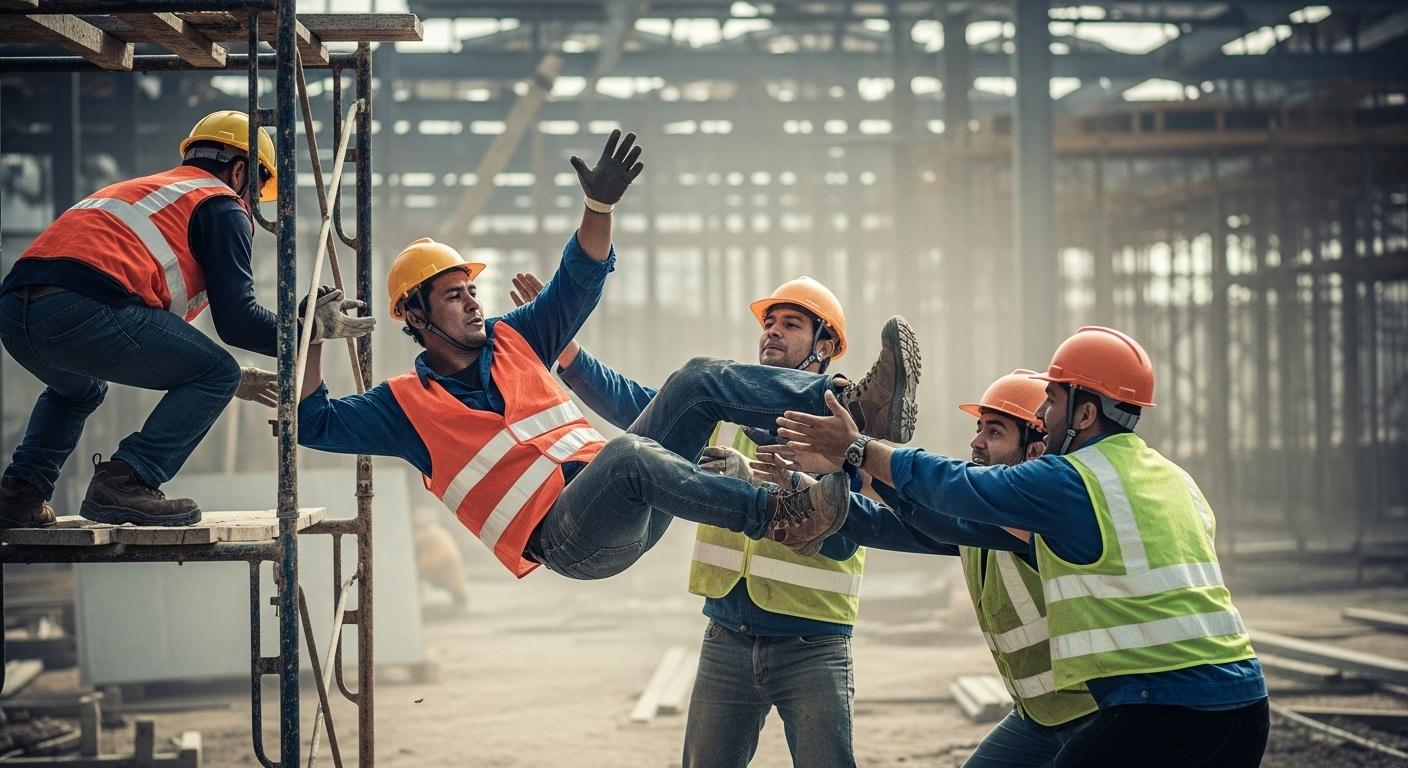
Construction sites are busy places with much activity and heavy equipment. With all that happening, safety is not simply a rule, it’s survival. What is the most frequent accident in construction? The simple answer is falls. But here’s the thing: even though fall accidents lead the pack, what caused them says a lot about how modern construction safety has room to improve. Let’s break it down.
Understanding Construction Site Accidents
There are layers of risk to every construction project, whether it is a towering skyscraper or a small home renovation. Workers manage unpredictable materials, changing ground conditions and they frequently work at heights that are considered unsafe.
Worldwide safety statistics show that nearly a third of construction injuries result from falls from roofs, ladders, scaffolds, or uneven ground. This highlights why safety planning is never optional. A construction cost estimate goes beyond just budgeting, it helps project teams plan materials, labor accurately. When estimating services and performing takeoffs, incorporating safety considerations ensures that every aspect of the build is accounted for, keeping both costs and people safe.
The Most Frequent Accident: Fall From Height
Why Falls Lead the List
Falls remain the leading cause of serious injuries and fatalities on construction sites. Workers constantly climb ladders, scaffolding, and exposed structural frames, and without proper harnesses, guardrails, or fall-arrest systems, a single slip can turn dangerous fast. Even relatively short drops, sometimes as little as six feet, can result in broken bones or traumatic head injuries.
According to OSHA, more than 60% of fall-related deaths in construction stem from the failure to apply basic safety measures that are already well known across the industry. That is why careful pre-planning, site hazard evaluations, and coordination with commercial construction estimating services during the takeoff and budgeting stage can play a role in identifying elevation risks early and allocating resources for proper protection before crews ever step onto the structure.
The Hidden Causes Behind Falls
In practice, here is what this means: most falls are not random. They happen because of:
-
Use of safety gear improperly: Employees bypass helmets or harnesses.
-
Poor supervision: Site supervisors do not enforce safety regulations.
-
Defective scaffolding or ladders: aging, untested gear topples.
-
Lack of training: Workers tend to think that a simple task will never cost them their lives as fast as it can.
The pattern reveals that it’s not only the physical hazards that breed falls, it’s the ethos of the site.
Other Common Construction Site Accidents
Falls may be the focus, but construction sites also experience other types of accidents that are worth noting. Here are some of the most frequent second thoughts.
Struck-By Accidents
When a heavy tool, machine or material strikes a worker it’s called a “struck-by” incident. They may be caused by cranes in motion, falling debris or insecure loads. Hard hats save lives here, however, but only if they are actually worn.
Caught-In or Caught-Between Accidents
Equipment that crushes or workers between moving objects can result in serious injuries. Little attention to good condition and availability apart is also a common case in this category.
Electrocution
Electrocution is an especially common risk on industrial construction sites, where heavy equipment, temporary power systems, high-voltage installations, and wet working conditions often overlap. Live cables, poorly protected panels, or rushed hookups can quickly turn into life-threatening situations if strict controls are not in place. This is why careful planning during takeoff and coordination with industrial estimating services in USA can help teams anticipate electrical loads, temporary power layouts, grounding requirements, and safety allowances before work begins, instead of scrambling to fix gaps once crews are already onsite.
Lockout-tagout procedures, routine testing, and code-compliant installations remain essential, but they are far more effective when the electrical scope has been properly defined from the very start.
Slips and Trips
Not all accidents are dramatic. Someone can be sent flying by a loose cord or spilled liquid. Though these smaller incidents might not be newsworthy, they have time and money penalties, and in some cases lead to long-term pain.
Why These Accidents Keep Happening
Construction sites change day by day, what’s safe in the morning could be dangerous in early or late afternoon. Weather, exhaustion, constant noise and the pressure to get it all done chip away at focus.
And here is the dark sentiment we need to face: many accidents happen because safety feels like an obstacle, not a goal. Workers cut corners, because they know the job,or managers take shortcuts to meet delivery dates. But every shortcut introduces invisible danger.
Preventing the Most Common Accidents
Training and Awareness
Safety training is more than an orientation formality. It demonstrates how to safely put a ladder to use, tie on with harnesses and in an emergency situation. Companies that refresh training every six months have fewer repeat accidents.
Site Inspections
Routine safety checks can spot early warning signs. Cracked scaffolding, loose railings or erratic lifts can be repaired before they turn into tragedies.
Modern Equipment
Newer safety gear, such as self-retracting lifelines and smart helmets, tracks workers’ movements and notifies them of dangerous conditions.
A Culture of Safety
The best shield is an attitude. When managers encourage safety and openly report hazards, so does the team.
The Upside: Site Safety, More Intelligent Teams
Here’s the silver lining: construction today is far more secure than it was a decade ago. Job sites are getting smarter and more predictive as advanced planning software, drones for site inspections and digital safety audits proliferate.
When every worker, from the foreman to the intern, considers safety part of their craft, accidents go down, productivity goes up and morale gets better. That is the kind of change that constructs not just buildings, but trust.
Conclusion
Then, what is the number one cause of accidents in a construction site? Falls, plain and simple. But that’s only the surface. The greater truth is that most accidents are avoidable with awareness, training and responsibility.
Each railing erected, every harness on a body and each toolbox talk matters. Because construction isn’t just about building up the world; it’s about making sure that the people who build it are kept safe enough to come back and try it another day.
FAQs
What is the number one killer of construction workers?
Falls are still the tops’ cause of fatal & serious injuries in construction, with falls responsible for more than a third of all site fatalities globally.
How common are construction site accidents?
Low-grade injuries happen every day on construction sites, but there are generally a few real injuries reported every month per region based upon how large the project is and if it’s subject to good safety management.
What is your best advice for workers to avoid falls at a construction site?
Workers must wear appropriate fall protection gear and always check the scaffolds, while avoiding working at height without supervisors or during bad weather.
الأقسام
إقرأ المزيد
Burn injuries can range from mild surface damage to deep skin trauma that affects tissues beneath the epidermis. Laser Therapy in Riyadh Traditional healing methods often focus on preventing infection and supporting natural recovery, but they may still leave visible scars, pigmentation changes, or uneven skin texture. In recent years, advanced dermatological technologies have introduced...

A new growth forecast report titled Automotive Suspension Market Size, Share, Trends, Industry Analysis Report: By System, Vehicle Type, Component, Damping (Hydraulic and Electromagnetic), Geometry, and Region (North America, Europe, Asia Pacific, Latin America, and Middle East & Africa) – Market Forecast, 2025 –2034 introduced by Polaris Market Research represents...

Hair restoration has become one of the most sought-after cosmetic procedures among individuals experiencing thinning hair or baldness. Choosing a Hair Transplant in Riyadh can be a life-changing decision for people looking to regain confidence and achieve a more youthful appearance. Proper preparation before the procedure plays a major role in ensuring smoother recovery and successful...

Polaris Market Research has introduced the latest market research report titled Cylinder Deactivation Systems Market Share, Size, Trends, Industry Analysis Report, By Component (Valve Solenoid, Engine Control Units, Electronic Throttle Control); By Actuation Method; By End Use; By Region; Segment Forecast, 2024 - 2032 that highlights the major revenue stream for the forecast period....
The Organic Acid Market worth USD 16.01 billion in 2026, is growing at a CAGR of 8.46% to reach USD 22.09 billion by 2033.The Organic Acid Market research report has been crafted with the most advanced and best tools to collect, record, estimate, and analyze market data. The report also sheds light on the market overview in its entirety touching diverse aspects like product definition,...